
Todaiji temple
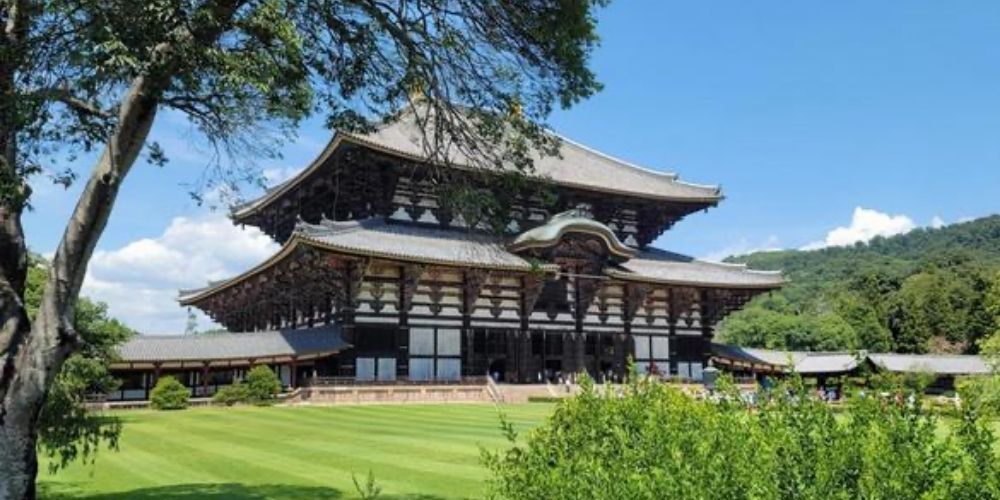
About Todai-ji Temple
Todai-ji, located in Nara, is one of Japan's most historically significant and culturally rich temples. Known for housing the Great Buddha (Daibutsu), Todai-ji is a landmark of Japanese Buddhism and an architectural marvel. The temple is part of the UNESCO World Heritage Site “Historic Monuments of Ancient Nara” and is a testament to Japan’s early religious and artistic achievements. Originally built in the 8th century, Todai-ji has played an important role in the spread of Buddhism in Japan and remains an active place of worship as well as a popular destination for visitors from around the world.
Highlights of Todai-ji and Recommended Surrounding Spots
The main attraction at Todai-ji is the Great Buddha Hall (Daibutsuden), which is one of the largest wooden structures in the world. Within the hall, you’ll find the Great Buddha,
a towering bronze statue of the seated Buddha Vairocana, which stands over 15 meters tall. The statue, cast in the 8th century, is an awe-inspiring sight, representing peace, wisdom,
and compassion. Around the Great Buddha, other impressive statues of Buddhist deities can be seen, adding to the temple's spiritual atmosphere.
Another highlight is the Nandaimon Gate (Great Southern Gate), a massive wooden structure that marks the entrance to Todai-ji. The gate is guarded by two colossal statues of the Nio,
fierce guardian deities that are over 8 meters tall, and were carved in the 12th century. These impressive statues are revered for their craftsmanship and historical significance,
reflecting the temple's long-standing role as a guardian of Buddhist values.
Inside the Daibutsuden, you’ll find a popular attraction for visitors called the Nose Hole – a wooden pillar with a hole the same size as one of the Great Buddha’s nostrils. It’s said
that those who can pass through this hole will be granted enlightenment or good fortune, making it a favorite activity, especially among children and tourists.
In the surrounding area, Nara Park is home to hundreds of freely roaming deer, which are considered sacred and symbolically linked to the Shinto deity of Kasuga Taisha Shrine. Feeding
and interacting with these gentle deer has become a unique and beloved experience for visitors. Close to Todai-ji, you can also explore Kasuga Taisha Shrine and Kofuku-ji Temple, both
of which are part of the Historic Monuments of Ancient Nara and add to the richness of Nara’s religious heritage.
Brief History of Todai-ji
Todai-ji was commissioned by Emperor Shomu in 743 during the Nara period to promote Buddhism and peace throughout Japan. At that time, Japan faced a series of natural disasters, diseases,
and social unrest, which led Emperor Shomu to encourage Buddhist devotion as a means to protect the nation. The Great Buddha statue was completed in 751, and its construction was an enormous
undertaking, involving craftsmen and materials from all over Japan and even from China.
Throughout its history, Todai-ji has been damaged and restored multiple times. The original Great Buddha Hall, completed in 752, was much larger than the present-day structure, but was destroyed
twice by fires caused by wars in the 12th and 16th centuries. The current hall, rebuilt in 1709, is still considered one of the largest wooden buildings in the world, despite being about
two-thirds the size of the original structure. Todai-ji continues to serve as a center for Buddhist learning and practice, and its Great Buddha remains a powerful symbol of peace and unity.
Admission Fees for Todai-ji
The admission fee for the Great Buddha Hall at Todai-ji is typically 600 yen for adults and 300 yen for children. This fee grants access to the Daibutsuden, where you can view the Great Buddha and explore the interior of the hall. There are also combination tickets available for visitors who wish to access other parts of the Todai-ji complex, including the Todai-ji Museum, which features rotating exhibits on Buddhist art and artifacts from the temple’s history.


